


AI Game Master - Dungeon RPG
4.62.83K Reviews
App Specs
- Version
- 3.4.1
- Updated On
- License
- Free
- Downloads
- 100,000+
- Developer
- Digital Dynasty Entertainment Inc
- Categories
- Role Playing
- Platform
- Android
Screenshots
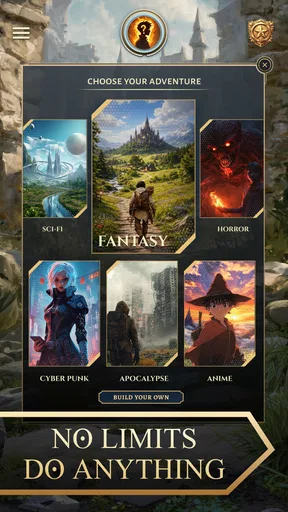
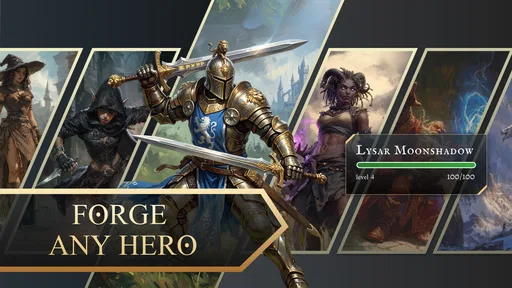
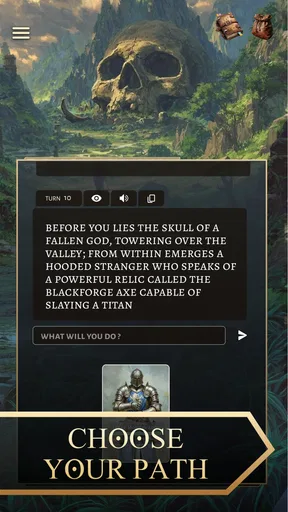
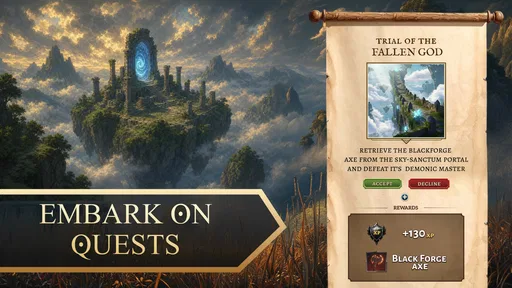
 Analysis by AppCompare
I went into AI Game Master - Dungeon RPG expecting a lightweight fantasy chat and came away finding something more interesting: a role-playing game built around decisions rather than a fixed sequence of battles. Its AI Game Master presents adventures through text, so the main challenge is not learning a large button layout. It is deciding what my character would attempt, how much danger I was willing to accept, and how clearly I could describe that choice.
That makes it a particularly personal kind of AI role-playing game. I am not simply selecting the strongest option from a menu; I am helping define the direction of the story. The experience sits in the space between a Dungeons & Dragons-inspired solo session, an interactive fantasy novel, and a chat-based improvisation exercise. It will not replace a human game master or a traditional party RPG, but it offers a convenient way to enjoy that style of play when I have no group available.
The game is free to start, and Digital Dynasty Entertainment Inc is the developer behind it. It belongs to the role-playing category, carries an Everyone 10+ content rating, and has reached over a hundred thousand installs. Those details match my impression of its audience: this is approachable enough for curious newcomers, while its best moments are more rewarding when I actively think like a role-player instead of waiting for the app to entertain me automatically.
How much freedom the AI Game Master really gives me
The central appeal is the conversation with the AI Game Master. I can describe an intention, ask questions about the situation, investigate a suspicious detail, negotiate with a character, or choose a direct action. That creates a wider decision space than a conventional mobile RPG where every possibility has already been reduced to a few visible commands.
In practice, the quality of a session depends heavily on how I phrase my actions. “I attack” is functional, but “I keep my shield raised, watch the doorway, and try to force the bandit away from the injured traveler” gives the story more direction. This is one of the first useful lessons I found: specific actions produce better role-playing than vague commands. The app becomes more engaging when I treat each message as an instruction to a narrator, not as a search query.
That freedom also requires restraint. Because the game is text-led, I cannot assume that every clever idea will become a perfectly balanced encounter. Sometimes I have to clarify what my character is attempting or accept that the AI interprets my wording differently from what I intended. I see this less as a flaw unique to this title and more as the cost of replacing a human referee with an automated one. A human can read tone, remember a table agreement, and challenge an unreasonable action immediately. An AI Game Master needs clearer boundaries from the player.
I found it helpful to establish a character’s personality early and maintain it. A cautious scout should not suddenly behave like a reckless berserker simply because the next choice sounds exciting. Keeping a consistent voice gives the adventure continuity and makes consequences feel more meaningful. It also reduces the temptation to test the system with unrelated requests that pull the story away from its fantasy setting.
Worth Reading Before You Choose

EA SPORTS FC Mobile 26 Is a Bigger Football Game, but It Takes Time

Flipboard Shows What News Apps Must Do Beyond the Feed

Switching to Android Auto Means Rethinking Your Driving Routine

Google Calendar Makes a Crowded Week Easier to Manage

Ludo King Makes the Most of the Minutes Between Plans

Baby Panda World Brings Quick Play to Modern Phones, but Its Game Library Feels Busy
The decision space is strongest for players who enjoy imagining possibilities. If I want a tightly balanced tactical board with visible ranges, exact abilities, and predictable rules, this is not the ideal substitute. A traditional role-playing game gives me more concrete control over combat positioning and character optimization. Here, the reward comes from describing intent and responding to the consequences.
Planning before the dangerous choice
One of the more useful ways to approach a session is to separate immediate action from preparation. Before entering a suspicious location, I can ask what my character notices, identify possible exits, and decide what information matters most. That small pause changes the rhythm of play. Instead of rushing from prompt to prompt, I begin building a plan for the next several turns of the story.
This is where the app can feel surprisingly close to tabletop role-playing. The important question is not always “What is the most powerful move?” It may be “What do I need to know before I commit?” Asking the Game Master to describe sounds, tracks, doors, or the behavior of nearby characters can reveal a safer route, create a negotiation opportunity, or expose a risk that a direct attack would ignore.
I would not treat every answer as an objective rulebook ruling. I use the AI’s responses as the current fiction of the adventure, then make decisions within that fiction. That mindset prevents disappointment when the experience behaves more like collaborative storytelling than a competitive strategy simulator.
For a newcomer, I recommend starting with a simple goal: rescue someone, recover an object, or reach a location. A focused objective is easier to follow than an enormous personal backstory and gives the Game Master a clear direction. Once the tone feels stable, I can add motivations, fears, relationships, and long-term ambitions. This gradual approach is more effective than trying to define an entire fantasy universe in the opening message.
Risk matters because failure changes the story
The most enjoyable decisions are rarely the obviously safe ones. I often have to choose between gathering more information and acting before an opportunity disappears, helping a stranger and exposing myself to danger, or taking a shortcut whose consequences are unclear. The game’s text format makes these choices feel personal because I am not merely spending an abstract action point. I am deciding what kind of adventurer I want to be.
My advice is to give every risky action a reason. Taking a chance because it supports the character’s goal feels satisfying even when the result is poor. Taking a chance only because I want to see whether the AI allows it can make the session feel arbitrary. The difference is important: meaningful risk creates a story, while random testing usually breaks immersion.
I also learned to distinguish between a dangerous plan and an underexplained plan. If I tell the Game Master that I sneak past a guard, the result may depend on details I never supplied. If I explain where I move, what distraction I create, and what I do if discovered, the action has a clearer shape. This does not guarantee success, but it gives the narrative more material to work with and makes the outcome easier to accept.
Risk is most rewarding when I define the fallback. Before committing to a negotiation, I might decide whether my character will retreat, offer a lesser bargain, or reveal a limited piece of information if the conversation turns hostile. Before exploring a ruin, I might establish what evidence would make me leave. These plans create counterplay even without a conventional combat interface.
That said, the game is not the best choice for players who dislike uncertain outcomes. The AI-led structure can feel less transparent than a system with visible dice, published formulas, and fixed enemy statistics. If I need to know exactly why an action succeeded or failed, a rules-heavy tabletop simulator or a traditional turn-based RPG will probably be more satisfying. This title asks me to accept some narrative ambiguity in exchange for flexibility.
Adapting when the adventure surprises me
Adaptation is where I felt the difference between reading an interactive story and actively role-playing. A plan that seemed sensible can become dangerous after a new detail appears. A character I expected to distrust me may offer useful information. A direct route may be blocked, forcing me to decide whether to negotiate, investigate, or change the objective entirely.
I get better results when I acknowledge those changes instead of pretending my original plan still controls everything. I can tell the Game Master that my character pauses to reassess, summarize what I believe is happening, and state the next priority. This is a practical workflow that keeps the story coherent: observe, interpret, choose, then explain the intended outcome.
Summarizing is especially useful after a long exchange. Text adventures can accumulate many names, clues, and promises, and I do not want an important thread to disappear inside a stream of improvisation. A short recap in my own words helps me decide what matters. It also gives the session a stronger sense of continuity than simply sending another disconnected command.
Another effective habit is separating character knowledge from player knowledge. I may suspect that a friendly merchant is hiding something, but my character should not automatically act as if that suspicion is proven. Asking cautious questions, testing a story, or assigning someone to watch the merchant creates better tension than confronting every uncertain clue. This approach gives the AI room to develop the situation without forcing a premature conclusion.
The tradeoff is that adaptation can demand more attention than a typical mobile game. I cannot always play on autopilot while half-watching something else. The experience works best when I have enough focus to remember the current objective and respond to new information. For a short commute or a quiet evening, that can be ideal. For a quick reflex session between tasks, it may feel too mentally involved.
A realistic everyday use case is a solo player who has twenty or thirty minutes after work but cannot arrange a full tabletop session. I can open the game, continue a fantasy adventure, make a few consequential decisions, and stop at a natural pause. The format is more flexible than coordinating several friends, though it does not provide the social energy of hearing real people react to the same scene.
What becomes deeper over repeated sessions
The long-term value depends on whether I enjoy shaping stories, not on collecting a conventional list of upgrades. The appeal grows when I give a character a consistent identity and let earlier choices influence later priorities. A character who began as a cautious traveler may gradually become more trusting, more ambitious, or more hardened because of the decisions I made.
I recommend keeping a small personal record of important names, unresolved clues, promises, and boundaries. This is not a requirement imposed by the app; it is a player technique that improves any ongoing AI narrative. A few notes prevent me from forgetting why a particular character matters and make returning to the adventure feel intentional rather than random.
There is also a useful distinction between a campaign and a series of experiments. If I constantly restart to find the “best” result, I lose the value of consequences. If I accept imperfect outcomes and continue, the story develops a stronger identity. That makes the game more suitable for players who enjoy emergent narratives than for those who want to optimize every branch.
The current version is 3.4.0, and the game supports devices running Android 7.0 or later. I appreciate that the entry requirement is not aimed only at recent phones, but device compatibility is only one part of the decision. The more important question is whether I enjoy reading and typing enough to make the format worthwhile. Someone looking for animated action, fast battles, or a large visual map may find the presentation too restrained.
Its average rating is around 4.6 from roughly fifteen thousand ratings, which suggests that many players connect with the concept. I would still treat that as a starting signal rather than a guarantee. AI-driven role-playing is unusually dependent on personal expectations. A player who wants open-ended storytelling may be delighted, while someone expecting a fully authored fantasy campaign may notice the improvisational edges immediately.
The free entry point makes experimentation easy, but the in-app purchase range extends from about a dollar to just over two hundred dollars per item. That is worth considering before becoming invested. I would begin without spending, learn how the sessions fit my habits, and only then decide whether any optional purchase improves the experience enough to justify it. The price structure is a more serious concern for players who prefer a single predictable purchase.
Who should play it, and who should choose something else
I would recommend this game to people who enjoy fantasy fiction, solo role-playing, improvisation, and making decisions with incomplete information. It is especially appealing if I have ever wanted to try a tabletop-style adventure but lacked a regular group. The AI Game Master lowers the social barrier and lets me play at my own pace.
It is also a good fit for writers who want a playful way to test character reactions. I can approach a scene as an adventurer, a negotiator, a detective, or a morally conflicted traveler. The game rewards curiosity and clear prompts, so it can become a useful creative exercise even when I am not pursuing a conventional victory.
I would suggest skipping it if I need exact tactical fairness, competitive multiplayer, rich real-time visuals, or a clearly documented progression system. A classic turn-based RPG will usually offer more dependable combat rules. A tabletop group will provide better social improvisation and a human who can adjudicate unusual ideas. A branching visual adventure may be preferable if I want carefully authored scenes rather than dynamically generated responses.
There is no single correct way to play, but there are better and worse expectations. I should not approach every scene as a puzzle with one hidden solution. I should treat it as a conversation in which my choices define the problem. When I do that, the uncertainty becomes part of the appeal rather than evidence that the game is failing to behave like a conventional RPG.
My strategy verdict after living with the format
My strongest recommendation is to play deliberately. State the goal, ask for the information that affects the decision, describe the action with enough detail to show intent, and prepare a response if the situation turns against you. That four-step rhythm gives the AI Game Master useful direction while leaving room for surprise.
I also recommend resisting the urge to issue commands that try to control every outcome. Saying that an attack definitely defeats an enemy or that a character must agree to a bargain removes the interesting part of the exchange. Describe what the character attempts, not what reality is required to do. The resulting uncertainty creates room for counterplay and makes success feel earned.
My final view is positive but specific. AI Game Master - Dungeon RPG is not a replacement for a full tabletop campaign, a tactical dungeon crawler, or a polished cinematic adventure. It is a flexible solo role-playing space where planning, wording, risk, and adaptation matter more than reflexes. I enjoy it most when I have time to think, accept imperfect outcomes, and treat the AI as a creative partner with limitations rather than an infallible referee.
For a free role-playing game with an Everyone 10+ rating, a low Android entry requirement, and a concept built around an AI narrator, it offers an unusually personal way to spend a quiet evening. I would start with a focused character and a modest objective, keep notes on the important threads, and judge the experience after several sessions rather than after one unusual response. If that style of decision-making sounds more exciting than tapping through predetermined choices, this is worth trying. If I want certainty, spectacle, or competitive depth, I would choose a different kind of RPG.
Pros
- Creates dynamic adventures tailored to your choices.
- No dungeon master or group is required to start playing.
- Supports creative role-play beyond fixed story paths.
- Quick setup makes it suitable for short gaming sessions.
- Can inspire new campaign ideas for tabletop RPG fans.
Cons
- AI-generated scenes may occasionally feel repetitive or inconsistent.
- Story quality depends heavily on how clearly you describe actions.
- Some players may miss maps
- miniatures
- and visual combat tools.
- Internet access may be needed for parts of the experience.
- Long campaigns can lose continuity between separate sessions.
FAQs for AI Game Master - Dungeon RPG
What is AI Game Master - Dungeon RPG?
AI Game Master - Dungeon RPG is an interactive role-playing game in which an artificial intelligence acts as the narrator and dungeon master. You create a character, describe your actions, explore fantasy locations, meet enemies and make decisions that influence the adventure. Instead of following one fixed storyline, the experience is designed to respond dynamically to your choices and written commands.
Do I need previous tabletop RPG experience to play?
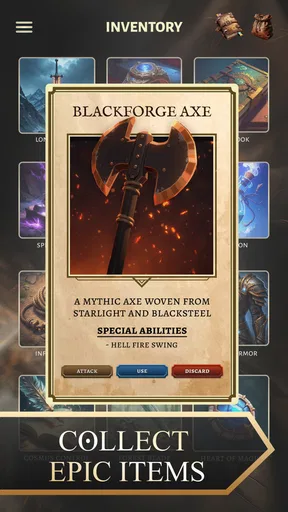
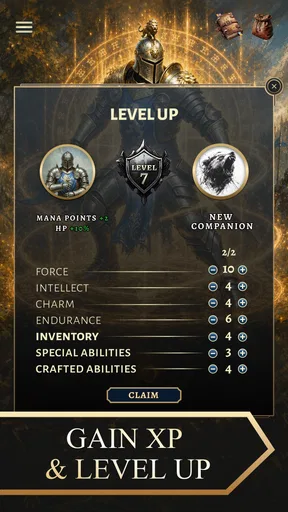
No previous experience with Dungeons & Dragons or other tabletop role-playing games is generally required. The game is designed around natural-language interaction, so beginners can start by describing what their character wants to do. However, understanding basic RPG concepts such as character abilities, combat, exploration and inventory management can make the first sessions easier and help you get more from the available gameplay options.
Does AI Game Master - Dungeon RPG require an internet connection?
An internet connection is normally important because the game relies on AI-generated narration, responses and adventure content. Without access to the service, some features may not work correctly or may be unavailable. Before downloading, check the current store description and permissions, especially if you plan to play while traveling, using mobile data, or in locations with an unreliable connection.
Is the game free to download, and does it include in-app purchases?
The application may be available as a free download, but access to certain AI features, extended play, premium content or usage limits can depend on the developer’s current monetization model. In-app purchases or subscriptions may be offered, and AI services can sometimes include restrictions on free usage. Review the Google Play or App Store listing carefully before confirming any payment.
What kind of gameplay and content should I expect?
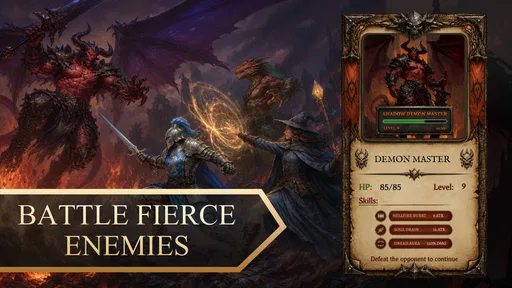
You should expect a text-focused fantasy adventure built around exploration, storytelling, character decisions and encounters generated by the AI game master. The exact quality and direction of a session can vary depending on your prompts and the system’s responses. Some adventures may include combat, quests, puzzles and role-playing, but the experience is less predictable than a traditional game with fully scripted levels and fixed outcomes.


